
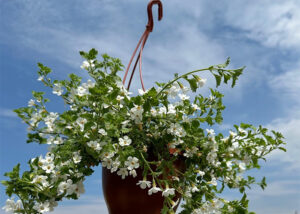
Bacopa Monnieri
Carpobrotus edulis L. (Growfoot)
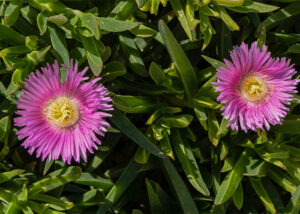
- Scientific name: Carpobrotus edulis L.
- In the public language: Goosefoot
- Homeland: South Africa
- Family: Aizoacae
- Height: 25 – 40 cm
- Leaf: Leaves are 8-10 cm long, fleshy, pale green, slightly curved and saw-toothed towards the tip. It is evergreen. Its leaves are consumed raw or cooked, even pickled. However, the fruit must be fully ripe.
- Flower: Yellow, pink flowers form in spring, the flowers are as big as the palm of a hand, and remain in bloom until mid-July. When the flowers are finished, the fleshy green leaves remain on them all year round, not spoiling the green appearance of your garden. The flowers open in bright sunlight and close at night.
- Resistance: -20° C
- Light Requirement: Full Sun or Half Shade
- Soil Requirement: It grows rapidly in arid, infertile soils. It has been used to reduce losses caused by erosion in sand dunes by the sea. It is also planted as a natural barrier against forest fires due to its resistance to fire to some extent.
- Water Requirement: It has high resistance to drought.
- Fertilization:
- Pruning: It does not require pruning. It is an ideal plant for slopes. It prevents erosion and soil runoff with rainwater on sloping lands.
- Diseases and Pests:
Cerastium tomentosa (Summer Snow)
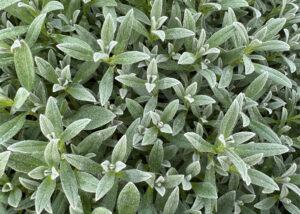
- Scientific name: Cerastium Tomentosa
- In Folk Language: Summer Snow
- Homeland:
- Family: Caryophyllaceae
- Height: 15 – 20 cm
- Leaf: Oval, spear-shaped leaves are covered with silvery hairs. Evergreen.
- Flower: Between May and June, white and has 5 sepals.
- Resistance:
- Light Requirement: Full Sun or Half Shade
- Soil Requirement: Grows in all types of soil, including calcareous and arid. Used in rock gardens, borders, slopes and between slope stones.
- Water Requirement: High resistance to drought.
- Pruning:
- Diseases and Pests:
- Fertilization:
Dichondra Repens (Mouse Ear)
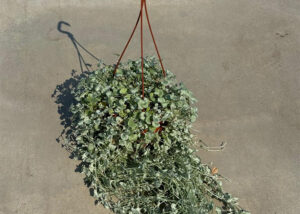
- Scientific name: Dichondra Repens
- In colloquial language: Mouse Ear
- Homeland:
- Family: Convolvuceae
- Height: 15 – 20 cm
- Leaf: It is a perennial, green ground cover plant in summer and winter. The plant, also known as mouse ear due to its round curved leaves, is a plant that grows rapidly by branching out to the sides. It can be stepped on, but it is suitable for planting in places with light traffic.
- Flower: It is preferred for its leaves, it does not have eye-catching flowers.
- Resistance: -10° C
- Light Requirement: Shade and Semi-Shade
- Soil Requirement: It has no special soil requirements. It can grow easily in acidic or neutral soils.
- Water Requirement: It is a type of grass that needs a lot of water.
- Pruning: It does not require constant mowing like grass, but it can be mowed twice a year (May and November). Deep mowing can damage the plant.
- Diseases and Pests:
- Fertilization:
Drosanthemum Floribundum (Persian)
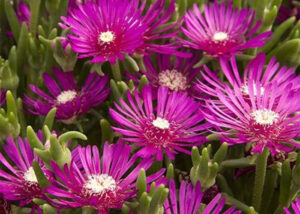
- Scientific name: Drosanthemum Floribundum
- In common parlance: Acemhalisi
- Homeland: South Africa
- Family: Aizoaceae
- Height:
- Leaf: It is a perennial plant with a succulent (meaty-watery leaves) structure. As it ages, its thin branch-trunk structure develops into a hard, woody-bush type. Since it spreads rapidly by spreading its branches around itself, it quickly covers the area where it is planted.
- Flower: It flowers in spring and summer. It has pinkish-purple flowers.
- Resistance:
- Light Requirement: Full Sun or Semi-Shade
- Soil Requirement: It grows even in arid and barren soils.
- Water Requirement: It has high resistance to drought.
- Pruning: It does not require pruning.
- Diseases and Pests:
- Fertilization:
Hedera Helix (Wall Ivy)
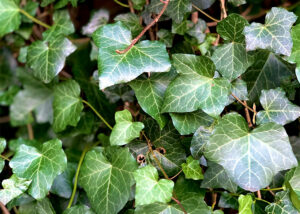
- Scientific name: Hedera Helix
- In colloquial language: Wall Ivy
- Homeland: Europe, North Africa and Asia
- Family: Araliaceae
- Height: 20 – 30 m
- Leaf: Evergreen. It is used in the pharmaceutical industry due to the expectorant effect of its leaves. However, since fresh leaves can cause poisoning, it is never a product that you can apply and use at home.
- Flower: It is preferred for its leaves, it does not have eye-catching flowers. Sometimes it blooms whitish green or yellowish-green flowers and eventually forms small black fruits.
- Resistance:
- Light Requirement: Shade and Semi-Shade
- Soil Requirement: It prefers moist and well-drained soils. Slightly acidic soils can also be preferred.
- Water Requirement: Irrigation should be done as the upper part of the soil dries.
- Pruning: It can turn into an invasive species when grown uncontrolled. Pruning can be done to prevent the plant from growing uncontrollably and cleaning the leaves is important for the health of the plant.
- Diseases and Pests:
- Fertilization:
Lotus Berthelotii (Parrot's Beak-Lotus Flower)
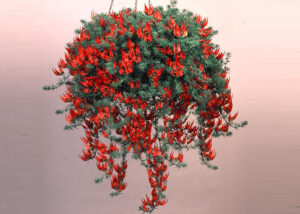
- Scientific name: Lotus Berthelotii
- In the public language: Parrot’s Beak-Lotus Flower
- Homeland: Canary Islands
- Family: Fabaceae
- Height: 1 m
- Leaf: Silvery green colored fine hair-covered leaves are up to 2 cm long, three or five needle leaflets are a whole.
- Flower: There are red, orange and golden yellow varieties. It blooms almost continuously from summer until winter.
- Resistance: -4° C
- Light Requirement:
- Soil Requirement: Its soil must be extremely drained and definitely humus.
- Water Requirement: It loves water very much.
- Pruning: If you cut the branch tips in the first half of spring, it will branch more. Therefore, there will be more leafing and more flowering.
- Diseases and Pests: Mealybug and spider mite
- Fertilization:
Lysimachia Congestiflora (Yellow Bride-Golden Globe)
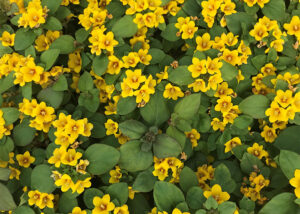
- Scientific name: Lysimachia Congestiflora
- In colloquial language: Yellow Bride-Golden Globe
- Homeland: Southern Asia from India to China.
- Family: Primulaceae
- Height: 30 cm
- Leaf: Does not shed its leaves in winter. Its branches are non-lignifying, flexible, sturdy herbaceous.
- Flower: Golden Globe gets its name from the yellow flowers it opens at the ends of the branches. The flowers are cup-shaped and 7-8 of them open together. Its yellow flowers are always on it from May to the end of summer.
- Resistance: -20C
- Light Requirement: Half Shade
- Soil Requirement:
- Water Requirement:
- Pruning:
- Diseases and Pests:
- Fertilization:
Lysimachia Nummularia (Yellow Girl)
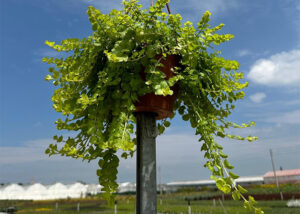
- Scientific name: Lysimachia Nummularia
- In Folk Language: Yellow Girl
- Homeland:
- Family: Primulaceae
- Height:
- Leaf: In the shade, it has green leaves, while in the sun, its leaves are yellow and pistachio green. Branches that touch the soil take root and its thin branches multiply rapidly and grow rapidly, spreading to the environment at a tremendous speed.
- Flower: If the Yellow Girl flower gets enough direct sunlight in the summer months, it blooms abundantly with yellow flowers.
- Resistance: -40C
- Light Requirement: Full Sun or Half Shade
- Soil Requirement: Actually, it is not picky about soil. It just shouldn’t be too acidic or too calcareous.
- Water Requirement: It loves water. It is a plant that requires regular watering. It is important that the soil remains moist.
- Pruning:
- Diseases and Pests:
- Fertilization:
Mesembryanthemum Cordifolium (Ice Flower)
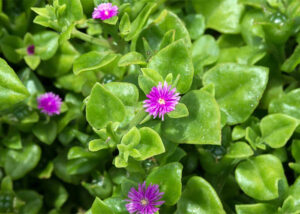
- Scientific name: Mesembryanthemum Cordifolium
- In the public language: Ice Flower
- Homeland: South Africa
- Family: Aizoaceae
- Height: 1 – 2 m
- Leaf: It is a perennial plant with a succulent (meaty-watery leaves). It grows as a ground cover and hanging plant.
- Flower: It blooms between April and October. Its star-like flowers are pink to purple. If it gets good sun and heat, it will bloom that much more.
- Resistance: -7C
- Light Requirement: Full Sun
- Soil Requirement: It should be sandy and humus.
- Water Requirement: It does not need much watering.
- Pruning:
- Diseases and Pests:
- Fertilization:
Muehlenbeckia Complexa Maori (Australian Ivy)
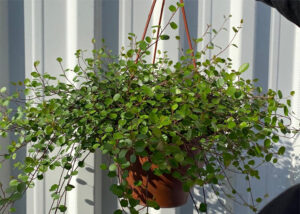
- Scientific name: Muehlenbeckia Complexa Maori
- In Folk Language: Australian Ivy
- Homeland: New Zealand
- Family: Polygonaceae
- Height: 4 – 5 m
- Leaf: You can create green, animal and flower motifs in summer and winter by setting a wire mold for your developing plant and wrapping it around the wires.
- Flower: It is preferred for its leaves, it does not have eye-catching flowers.
- Resistance: -12C
- Light Requirement: Full Sun or Semi-Shade
- Soil Requirement:
- Water Requirement: It requires moderate water. Excessive watering should be avoided.
- Pruning:
- Diseases and Pests:
- Fertilization:
Sedum Spectabile (Autumn Fire)
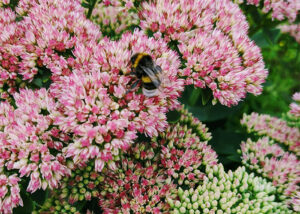
- Scientific name: Sedum Spectable
- In the public language: Autumn Fire
- Homeland: China and Korea
- Family: Crassulaceae
- Height: 45 – 50 cm
- Leaf: It has alternate, simple, toothed leaves on its upright branched fleshy stems. With the arrival of spring, the bottom of the branches that dry up, together with the leaves inside, sprouts in balls are seen.
- Flower: It blooms between spring and autumn. It blooms 20-25 cm long-lasting pink flowers in the form of an umbrella, star-shaped. It is considered among the most beautiful flowers of the autumn season.
- Resistance: -40C
- Light Requirement: Full Sun or Half Shade
- Soil Requirement: It is not selective in terms of soil.
- Water Requirement: It requires moderate water.
- Pruning:
- Diseases and Pests: While the nematode parasite in the field soil is generally a danger, it can cause root rot. These parasites that eat away at the roots and acidic soil cause the plant to die. Otherwise, it is a healthy plant species that does not attract pests.
- Fertilization:
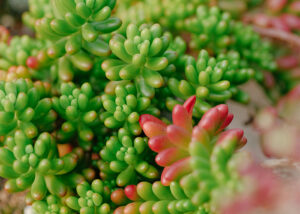
Sedum SPP
Soleirolia soleirolii (Tangle)
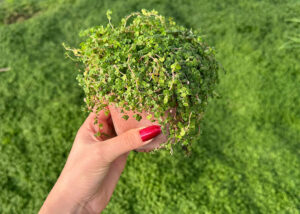
- Scientific name: Soleirolia Soleirolii
- In colloquial language: Arapsaçı
- Homeland: Coastal regions in the north and west of the Mediterranean.
- Family: Urticaceae
- Height:
- Leaf: It has many very small, light green shiny leaves that cover the soil very quickly like a lush green hazelnut.
- Flower: It is preferred for its leaves, it does not have noticeable flowers.
- Resistance: -2C
- Light Requirement: Shade and Semi-Shade
- Soil Requirement: It is not picky in terms of soil.
- Water Requirement: It loves water very much.
- Pruning: It does not require pruning. It can be pruned by cutting the leaves occasionally to shape the plant.
- Diseases and Pests: There is no known common disease or pest.
- Fertilization:
Verbana SPP (Mine)
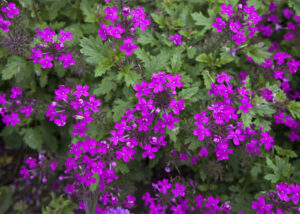
- Scientific name: Verbana SPP.
- In the public language: Mine
- Homeland: South America
- Family: Verbenaceae
- Height:
- Leaf:
- Flower: It blooms in spring and autumn. Its flowers range from white to red, from lilac to blue.
- Resistance: -4C
- Light Requirement: Full Sun or Half Shade
- Soil Requirement: It prefers well-ventilated, organic-rich, sandy soils.
- Water Requirement: It should be watered regularly and abundantly.
- Pruning:
- Diseases and Pests: Its important diseases are root rot, wilt, powdery mildew and Fusarium spp. Its pests are nematodes and slugs.
- Fertilization:
Vinca Major (Persimmon)
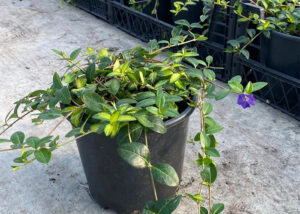
- Scientific name: Vinca Major
- In the public language: Periwinkle
- Homeland: Europe and Asia
- Family: Apocynaceae
- Height: 1 – 2m
- Leaf: Evergreen. and are arranged opposite each other. In medicine, it is used in the production of blood cancer drugs thanks to the Vinblastine compound it contains.
- Flower: Its fan-shaped flowers are purple, lilac, white.
- Resistance:
- Light Requirement: Shade and Semi-Shade
- Soil Requirement: The soil should be rich in nutrients.
- Water Requirement: It requires moderate water. Excessive watering should be avoided.
- Pruning:
- Diseases and Pests:
- Fertilization:
Vinca Minor (Persimmon)
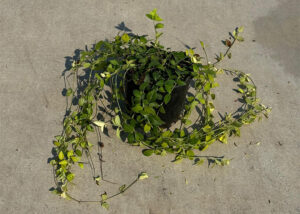
- Scientific name: Vinca Minor
- In colloquial language: Periwinkle
- Homeland: Europe and Asia
- Family: Apocynaceae
- Height: 1 – 2m
- Leaf: Evergreen. and are arranged opposite each other. In medicine, it is used in the production of blood cancer drugs thanks to the Vinblastine compound it contains.
- Flower: Its fan-shaped flowers are purple, lilac, white.
- Resistance:
- Light Requirement: Shade and Semi-Shade
- Soil Requirement: The soil should be rich in nutrients.
- Water Requirement: It requires moderate water. Excessive watering should be avoided.
- Pruning:
- Diseases and Pests:
- Fertilization: